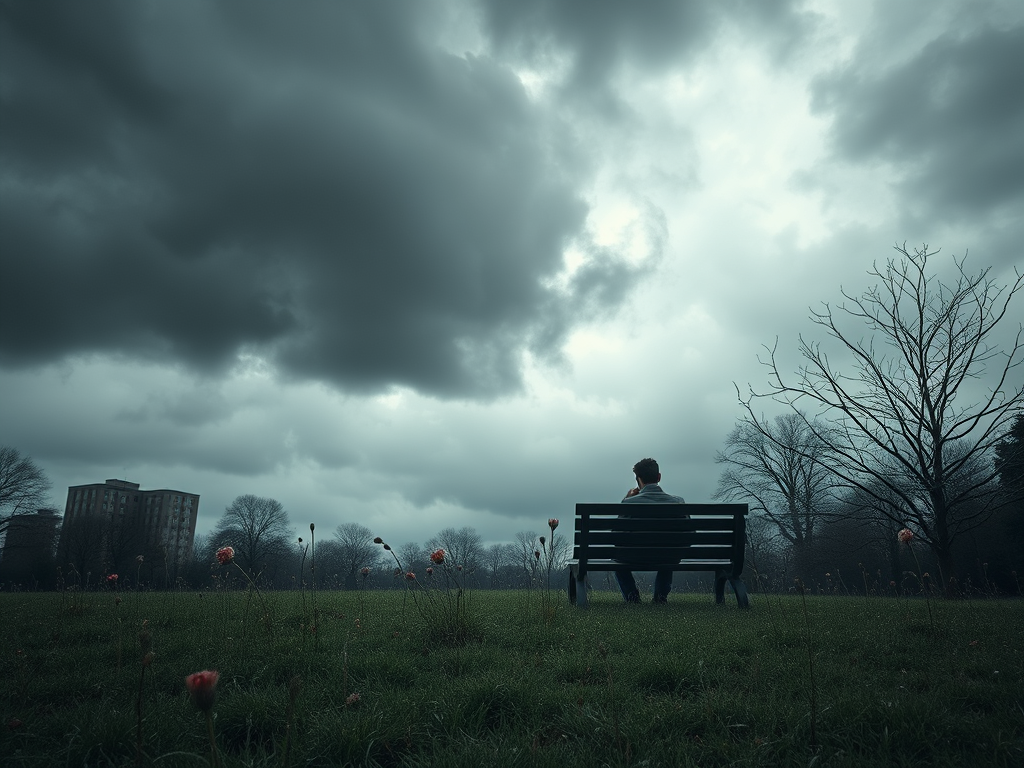
There are days when sadness is not a feeling but a landscape. You wake up and it is already there, spread across the day like heavy weather. Nothing dramatic has happened that morning. No catastrophe. No breaking news. Just a quiet, slow certainty that the weight is back again.
People who have never felt this kind of sadness imagine it as crying or visible distress. Sometimes it is like that. But often it is quieter. It sits in the body like damp air in a room that never quite dries out.
You can make a cup of tea.
You can answer a message.
You can walk outside.
But underneath those small actions the sadness remains, steady and patient.
It does not shout. It does not demand attention. It simply stays.
And that is what makes it overwhelming.
When sadness becomes overwhelming, the first instinct is often to fight it. To push it away. To pretend it isn’t there.
Doctors and therapists sometimes say helpful things. Write your thoughts down. Talk to someone. Get outside. Move your body. These things can help. They can create small spaces where the sadness loosens its grip for a while.
But there is another truth people rarely say aloud.
Sometimes the sadness does not leave quickly.
Sometimes the only thing you can do is learn how to sit beside it.
Over time you begin to notice patterns.
Sadness has tides.
It rises.
It falls.
Then it rises again.
In the middle of the worst moments it feels permanent, as if the world has narrowed and this emotional weather will never change. But if you look closely enough, you begin to see that it does shift.
A heavy day becomes a slightly lighter evening.
A sleepless night becomes a quiet morning.
The changes are small, but they matter.
They remind you that the sadness, however powerful, is not the whole story of a life.
One of the strangest things about overwhelming sadness is how ordinary the world continues to be.
Cars still pass on the road.
People laugh in cafés.
A neighbour cuts their grass.
The sky changes colour as the day moves forward.
Life goes on with complete indifference to the private storms inside someone’s mind.
At first this can feel cruel. Later it can feel strangely comforting. The world continues, and somehow you continue with it.
Even on days when the effort feels enormous.
Writing became one way of coping.
Someone once suggested writing thoughts down and throwing the paper away. The idea was simple: empty the mind, release the feeling, move on.
But sometimes the paper is not thrown away.
Sometimes the words stay.
And when they stay, something interesting happens. The sadness that felt impossible to describe becomes visible. It becomes language.
Not beautiful language. Not tidy or inspirational.
Just honest.
Honesty matters more than optimism in moments like this.
People often search for uplifting conclusions or neat solutions to emotional pain. But real life is rarely that tidy. Some days are simply difficult. Some periods last longer than expected.
Acknowledging that truth can be strangely relieving.
You stop pretending.
You stop performing wellness for the benefit of others.
You simply say: today is a hard day.
And that is enough
Closing thoughts
Overwhelming sadness does not always disappear when you want it to. Sometimes it stays longer than seems fair. Sometimes it returns just when you thought you had moved past it.
That can make a person feel weak or broken.
But continuing through those days is not weakness. It is endurance.
There is a quiet strength in simply remaining here. In getting through another morning. In making another cup of tea. In writing down the thoughts that refuse to stay silent.
Life does not always move forward in dramatic steps. Often it moves in inches.
One hour survived.
One day endured.
One small moment where the weight lifts, even slightly.
Those moments matter more than they appear.
If you are reading this while carrying overwhelming sadness of your own, know that you are not the only one walking through it. Many lives contain these hidden landscapes, even if they are rarely spoken about.
Writing these words is one way of facing it.
Reading them might be another.
And sometimes, simply staying here is enough for today.

Leave a Reply