Struggling with burning, retention or emptying your bladder away from home? This is what helped me.
I cannot pee. My prostate has decided to block the pipe.
I cannot pee. My prostate has decided to block the pipe.
I’ve now been catheterised for two weeks and wanted to share the practical things that have genuinely helped me manage daily life away from home.
The Catheter Valve Changed Everything

A catheter is usually attached to a drainage bag strapped to your leg, but I found wearing a bag all day impractical.
What helped most was using a catheter valve attached directly to the catheter. I keep the valve closed during the day and only attach a drainage bag when I need to empty my bladder. After a couple of hours I get the usual “need to pee” feeling, attach the bag, open the valve and drain.
For me this feels far more normal and manageable.
A medical professional explained that a valve allows the bladder to fill and empty in cycles instead of constantly draining, which is closer to normal bladder function and may help prevent the bladder becoming “lazy.” I was also advised it may reduce infection risk because you are not repeatedly disconnecting bags at the catheter itself.
Obviously follow your own medical advice, especially if you are awaiting urology review, but this setup has worked much better for me.
Posture Matters More Than You Think
I quickly discovered posture makes a huge difference.
Standing often gave me only a dribble, and sitting upright was not much better. What worked best was leaning back into a relaxed slouched position at roughly 45 degrees. As soon as I did that properly, my bladder emptied quickly.
My “Grab Bag”
Whenever I leave the house, I carry:
- Folded catheter bag
- Small absorbent pads
- Toilet roll
- Spare underwear
- Spare trousers
- Small towel
Having an emergency kit massively reduces anxiety.
What Finally Worked Away From Home
The first time I properly emptied my bladder away from home was after a lot of trial and error.
I initially tried standing and sitting upright with almost no drainage. Later I sat on the toilet, leaned back into a deep slouch and drained roughly 500ml within a minute.
That was when I realised posture was the key for me.
Public Toilets
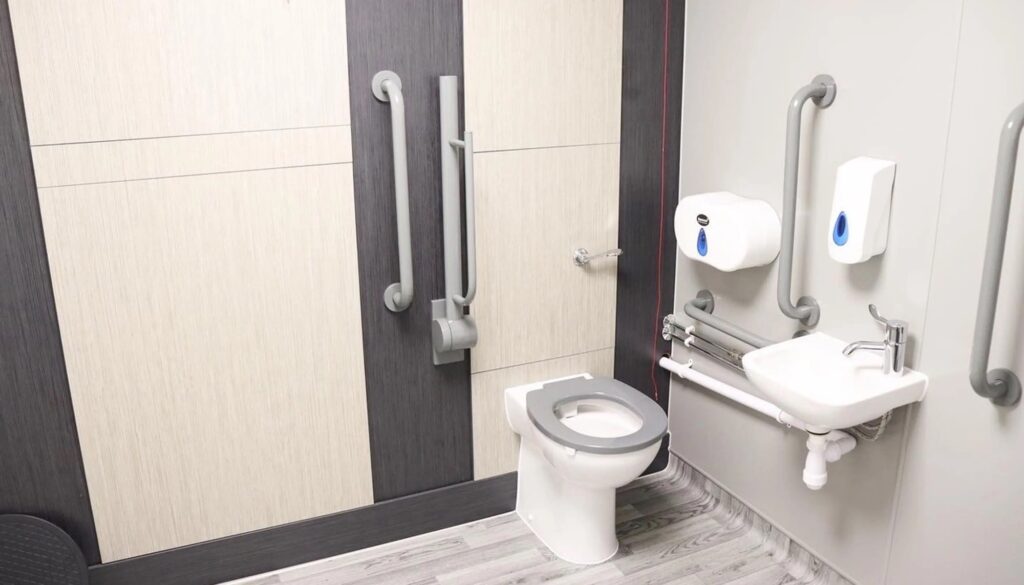
I’ve since repeated the same process successfully in disabled public toilets, which are practical because you have space, privacy and a sink nearby for cleaning up.
My routine is:
- Put toilet roll or an absorbent pad on the floor
- Place the drainage bag on top
- Attach bag to catheter valve
- Open valve
- Lean back into slouched position
- Wait for bladder to drain
Once finished:
- Close valve first
- Detach bag carefully
- Empty into toilet
- Rinse if possible
- Dry and repack
Simple, discreet and effective.
Invisible Disability Is Still Disability
People often do not realise how difficult this can be socially.
You may look completely fine while dealing with burning, urgency, leakage worries, pain, catheters and drainage bags. Some people may question why you are using a disabled toilet because they cannot see your condition.
But invisible disability is still disability.
You have every right to use facilities that help you manage safely and with dignity.
Final Thoughts
For me, the catheter valve has been the biggest improvement.
If you are newly catheterised and feeling overwhelmed or embarrassed, you are not alone. It feels frightening at first, especially when life suddenly revolves around appointments, equipment and new routines.
I joked with hospital staff that when you walk into A&E, you leave your dignity at the door. Being urgently catheterised is not something anybody forgets.
But try not to isolate yourself from your partner or family. Most people are far more understanding than we expect.
I also think many men quietly withdraw during this period. Some end up sleeping in the spare bedroom or using a separate bathroom because they feel embarrassed, anxious or worried about disturbing their partner. I’m still sleeping in the spare bedroom myself. These can be massive changes to a relationship or marriage, and it is important to recognise the emotional impact as well as the physical one.
And if you are newly catheterised, remember this: it becomes far more manageable once you develop your own routines and regain confidence day by day.
